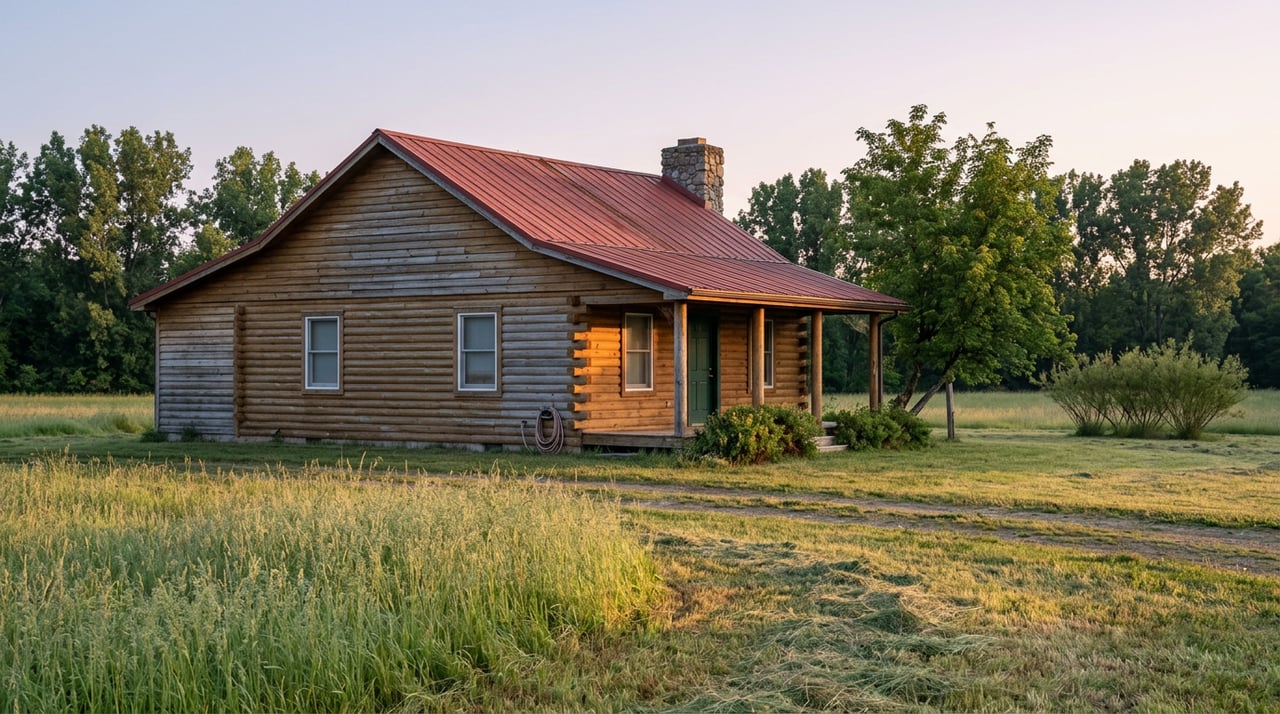
Buying Irrigated Land Near Hotchkiss? Know the Water Rights
August 13, 2026
August 13, 2026
"Putting water back in the FMC is going a little better than anticipated."
That's the kind of update Fire Mountain Canal and Reservoir Company shareholders read on the company's own website this spring, after a stretch that was anything but routine. On April 15, a hillside along the canal's route near Somerset started sliding. It dropped another 12 to 18 inches overnight, and the company drained and shut the entire canal before the slope could fail further. For roughly 488 water users between Somerset and Hotchkiss, the tap simply stopped, with repairs expected to stretch into early May.
Nobody's land title changed that week. Nobody's water decree changed. And yet water stopped moving to fields that, on paper, had every legal right to it. That gap between what a deed says you own and what actually reaches your pasture is the thing most buyers of irrigated land near Hotchkiss don't think to ask about until they're already under contract.
In Colorado, water and land are separate legal assets. Buying a parcel with a ditch running through it does not automatically mean you're buying the water in that ditch. According to Land Title Guarantee Company, Colorado operates under prior appropriation, "first in time, first in right," which means a water right is defined by who put it to beneficial use first, not by who owns the ground it crosses. A property owner can be genuinely surprised to learn they have no right to interfere with, or draw from, a ditch that runs across their own land.
This isn't a technicality that only matters to lawyers. It's the difference between buying a working hay meadow and buying a dry field with a pretty view of a canal.
Around Hotchkiss, water rarely shows up on a deed as a number of acre-feet. It shows up as shares in a mutual ditch company, and the company, not the county, keeps the real ledger of who owns what. Three names come up constantly in the valley: Short Ditch Company, Short Ditch Extension Company, and Smith McKnight Ditch Company, alongside Fire Mountain Canal and Reservoir Company, the larger system that runs from a diversion near Somerset down through Hotchkiss.
What trips people up is that a "share" means something different in every one of these companies. Here's how that plays out on real North Fork Valley acreage:
| Property size | Ditch company | Shares carried |
|---|---|---|
| Roughly 357 acres with river frontage | Short Ditch Co. / Short Ditch Extension Co. / Smith McKnight Ditch Co. | 116.5 / 116.5 / 237.5 shares |
| Roughly 64 acres | Short Ditch Co. | 47 shares |
| Roughly 45 acres on Rogers Mesa | Fire Mountain Canal | 1,100 shares |
Forty-seven shares waters 64 acres in one company. Eleven hundred shares waters 40-some acres in another. A share only means something relative to the total number of shares that specific company has issued and how much water that company actually delivers per share in a given year. A number on a listing sheet tells you nothing on its own. You have to ask the company.
Water Finance & Management explains that Colorado title companies generally will not write insurance on water rights, and water attorneys prepare title opinions and abstracts instead, confirming whether a seller actually owns the shares or decree they're conveying. And because water rights are severable from land, meaning a seller can hold onto them even while selling the ground itself, a buyer has to confirm affirmatively that water is actually included in the deal, not assume it.
Berg Hill Greenleaf Ruscitti, a Colorado law firm that works regularly on water and real estate matters, puts it plainly: property owners are often surprised to learn they may not own or control an irrigation ditch or pond that runs through their own property, and a well's permit has to be checked against a water court decree to confirm its operation and use are actually consistent with what the property owner intends.
Before writing an offer on irrigated acreage near Hotchkiss, the documents worth asking for are:
A share transfer is a separate issue to confirm with the ditch company rather than assume the closing settles it. If a change of use is involved, say converting a right from strictly agricultural to something else, that can add real time to a closing timeline. Neither issue is unique to any one ditch company in the valley, and it's worth building extra time into a purchase contract rather than assuming a farm or ranch closing moves at residential speed.
Here's the part the Fire Mountain Canal shutdown makes impossible to ignore. A decreed or adjudicated water right gives you legal standing. It does not guarantee that water will physically show up every year, and 2026 proved that from two directions at once.
The hydrology was already working against the valley before the hillside slipped. Statewide snow water equivalent on April 1, 2026 came in at 1.66 inches, according to the Colorado Water Supply Outlook Report from the USDA's Natural Resources Conservation Service, less than a third of the previous record low of 5.21 inches set in the 1976-77 water year. The Western Slope Conservation Center's own April 2026 snowpack recap for the North Fork Valley put it just as directly: the valley floor received about 4 inches of water equivalent all winter, in what the Colorado Climate Center measured as the warmest winter on record locally, roughly 3.5 degrees above the 150-year average, warm enough that ditches were turned on nearly a month earlier than usual.
Then, on top of a record-dry winter, the canal itself failed. A hillside gave way just as spring turn-on was underway, the exact window when orchards are breaking bud and pastures need their first deep watering. The largest irrigation system on the north side of the valley, one that draws its water from Paonia Reservoir, a facility whose active capacity is reserved entirely for Fire Mountain shareholders, went completely dark for weeks while the company worked with the Bureau of Reclamation on repairs.
Two landowners with identical shares in the same company had an identical legal claim to water that, for a stretch of this spring, neither one could actually use. The decree didn't fail. The infrastructure did. That's the risk a paper right can't show you, and it's exactly why due diligence on irrigated land has to include a conversation with the ditch company about the physical condition of its system, not just a review of the decree.
Not "does this property have water rights." Ask instead: which company, how many shares relative to that company's total, has the company approved a transfer like this before, and what has this specific parcel actually received in recent irrigation seasons. Those four answers tell you more about whether a property will function as a working farm or ranch than any acreage figure on a listing sheet.
Does a ditch running through my property mean I own water rights? Not necessarily. The ditch company that built and maintains it may own the water and hold an easement across your land regardless of who owns the ground.
What happens to my shares if the canal itself needs repairs, like Fire Mountain Canal did this spring? You still legally hold your shares. What you may not get, temporarily, is water, since a share is a claim on the system's output, not a stored guarantee.
Can I get title insurance on water rights the same way I insure the land? Typically not in the same way. Water rights review generally falls to a water attorney who prepares a title opinion or abstract, separate from the standard owner's title policy on the real property.
Water is the reason land works in the North Fork Valley, and it's also the part of a purchase most likely to be misunderstood. If you're looking at irrigated acreage, an orchard, or a working farm near Hotchkiss and want help sorting out what's actually included before you write an offer, Needlerock Mountain Realty has spent years working through exactly this kind of due diligence with buyers and sellers across the valley. Find Your Place in Colorado, water rights and all.
This article is general information, not legal, tax or financial advice. Consult a qualified professional about your situation.
Stay up to date on the latest real estate trends.
A home, a ranch, a mountain retreat, or a thriving farm—every property represents a different way of life. Our team is passionate about helping clients discover the land, lifestyle, and opportunities that make Western Colorado extraordinary.

NEEDLEROCK MOUNTAIN REALTY & LAND, LLC
[email protected]
OPEN HOURS
MONDAY - FRIDAY: 9:30 AM TO 5:00 PM
CRAWFORD OFFICE
380 HIGHWAY 92
CRAWFORD, CO 81415
(970) 921-5331
PAONIA OFFICE
236 GRAND AVE
PAONIA, CO 81428
(970) 527-5331